Loading
Know which ads bring new therapy clients, without telling Google or Meta who they are.
Hippo is HIPAA-compliant conversion tracking for solo and group practices. It counts the consult requests, calls and bookings your ads produce, and keeps client identities out of what the ad platforms receive.
No annual contracts.
Transparent pricing.
We set it up for you.
A new client starts as a form, a call or a booking request
Therapy ads rarely end in a purchase. Someone clicks, reads your page, and then fills in a contact form, calls, or asks for a free consultation. Often the booking itself finishes somewhere your website can't see, like a SimplePractice(opens in a new tab) or TherapyNotes(opens in a new tab) portal.
That gap is why so many owners count a click on the "Book appointment" button and hope it means something.
What is worth counting:
- a call that came from an ad
- a submitted contact or intake form
- a consultation request or booking
What isn't:
- page views
- button clicks
- form starts
If Google is optimising toward those, it is finding you people who browse.
Here is the sum with one owner's reported numbers.
One owner's reported numbers
- Ad spend a month
- about $750
- Contacts a week
- roughly two
- Cost per contact
- about $90
- Contacts who become clients
- one in three
- A new client costs
- about $270
Whether that is good depends on how long your clients stay, but it is a number you can make a decision with.
Try it with your own numbers. If you can't fill in the contacts, or can't say which campaign they came from, that is the gap Hippo closes. It records each consult request, call and booking and ties it to the campaign that produced it. Google's bidding also gets real client actions to learn from.
What practice owners say

They can't tell what's working
Owners describe paying for ads month after month without a way to connect the spend to new clients.
I've used them in the past but can't tell which referrals come directly from ads. Anyone here think they're worth it?
r/therapists Over the last three months I’ve run multiple campaigns, set up for google search, optimized in all of the right way, sent to my website and also specialty pages, which are really awesome, and got one single client from it. Literally like 4000 spent, and almost nothing in return.
r/therapists I have seen about 3-6 form submissions/calls per week from this spending amount. Converting approximately 1-4 of those 3-6 to clients.
r/therapists 
They worry about the tracking itself
The same owners know the usual tracking tools carry risk, and aren't sure what they are allowed to keep.
Trying to figure out how I keep access to my website analytics, google business page, etc. while remaining compliant. Stuck in a loop in my brain
r/therapists While a settlement, this implies that using tracking pixels violates HIPAA. Lots of therapists potentially do the same on their small practice websites. Wish there was settled law on that.
r/therapists It’s so hard to advertise effectively as a therapist when up against the corporatized therapy platforms. The savvy ones use services that scrape the HIPAA off the data to Google
r/therapists
Google and Meta already treat therapy as a sensitive category
If Google has put a "Health in personalized advertising" notice on your account, this is why. Google names mental health counseling as a sensitive interest category. Advertisers in it cannot use their own audience lists, which rules out Customer Match, remarketing lists and lookalike segments. Practitioners report that search campaigns keep running with a "limited" label.
Google's customer data policy adds a second limit. Conversions tied to sensitive categories cannot be measured with enhanced conversions, the feature many agencies switch on by default.
Meta
Meta's terms forbid sending it health information, and its help pages list mental health and psychological states by name. The rule covers event names too. An event called "anxiety consult booked" breaks it on its face. Meta also sorts health websites into a category that limits what their events may carry.
An event name, before and after
"anxiety consult booked"Breaks Meta's terms
A neutral event nameWhat Hippo sends
Sent without the visitor's
- name
- phone number
- IP address
With audience targeting this narrow, the conversion signal is most of what you have left to steer a campaign. Hippo sends it with a neutral event name and without the visitor's name, email, phone number or IP address.
HIPAA is only part of the exposure
Federal
HHS guidance
In June 2024 a federal court struck down the part of HHS's tracking guidance(opens in a new tab) that covered visits to public pages. The rest still stands, and contact, intake and booking pages are where a visitor says who they are and why they came.
Federal
Federal Wiretap Act
$10,000It allows statutory damages of $10,000. This is the claim that survived dismissal in the LifeStance case.
State
California
$5,000The state's privacy law(opens in a new tab) sets $5,000 per violation, and the plaintiff does not need to show harm. It reaches any practice with California visitors, including telehealth.
State
Washington
The My Health My Data Act(opens in a new tab) covers website visitors who never become clients, and it requires separate consent before their health data is shared.
Federal
FTC
$7.8 millionThe agency ordered BetterHelp to pay $7.8 million(opens in a new tab) for sending intake answers and emails to ad platforms. It needed no HIPAA finding to do it.
Enforcement in Mental Health Care
LifeStance Health(opens in a new tab)
$3,027,874.44
LifeStance Health agreed to a settlement fund of $3,027,874.44(opens in a new tab) over tracking on its website. One group in the class is defined as people who booked a session through the online booking tool on its public site. Final approval is pending, with a hearing set for October 16, 2026.
Thriveworks(opens in a new tab)
Up to $1.9 million
Thriveworks agreed to pay up to $1.9 million(opens in a new tab) in a separate case. That one involved Google and LinkedIn tags, with no Meta Pixel at all.
Rogers Behavioral Health(opens in a new tab)
$650,000
Rogers agreed to a $650,000 settlement fund over claims that analytics tools, cookies and pixels on its websites sent visitors' web activity to Facebook and other companies without sufficient consent.
Headlight Health(opens in a new tab)
Settled, 2026
A January 2026 lawsuit said the Meta Pixel on its website sent visitors' page activity to Meta. Headlight settled with the plaintiff individually, and the case was dismissed in May 2026. The amount was not made public.
Insight Therapy Solutions(opens in a new tab)
Pending
A 2026 lawsuit says Google tracking tools on its website sent visitors' mental health quiz answers to Google. The case is pending in federal court in Illinois.
What the cases have in common:
The tools were ordinary.
They were the same tags an agency or a website template adds by default.
Nothing was hacked.
The claim was that the site passed along who was seeking therapy.
The laws behind these cases apply to any website that takes a booking.
See what your booking page sends to Google and Meta →(opens in a new tab)How Hippo works
Your website
Book your appointment
Book now
Call us
Booking
Call
Hippo
Records events
Removes identifying information
Sends clean conversion data
Excluded from conversion events
Names
Conditions
IP addresses
Clean conversion events only
Google / Meta


Booking
Call
Remove the pixels that send PHI.
Take the Google and Meta pixels off your site.
Paste one snippet.
Hippo records visits, bookings, and calls, then removes client names, health details, and IP addresses from the conversion events sent to Google and Meta.
Send clean conversions back to Google and Meta.
Google and Meta receive conversion signals they can use to optimize your campaigns. Client names, health details, and IP addresses stay out of those events.
With the software you already use. Most practices we hear from run SimplePractice or TherapyNotes, often alongside Headway(opens in a new tab) or Alma(opens in a new tab). SimplePractice says its portals carry no third-party pixels, so nothing inside the portal reports to your ad accounts. Hippo records the request where it starts, on your own site, and picks up bookings from the scheduling tools you connect.
Supported integrations
Hippo works with the ad platforms and website tools your practice already uses.
Conversion
Hippo
What you get
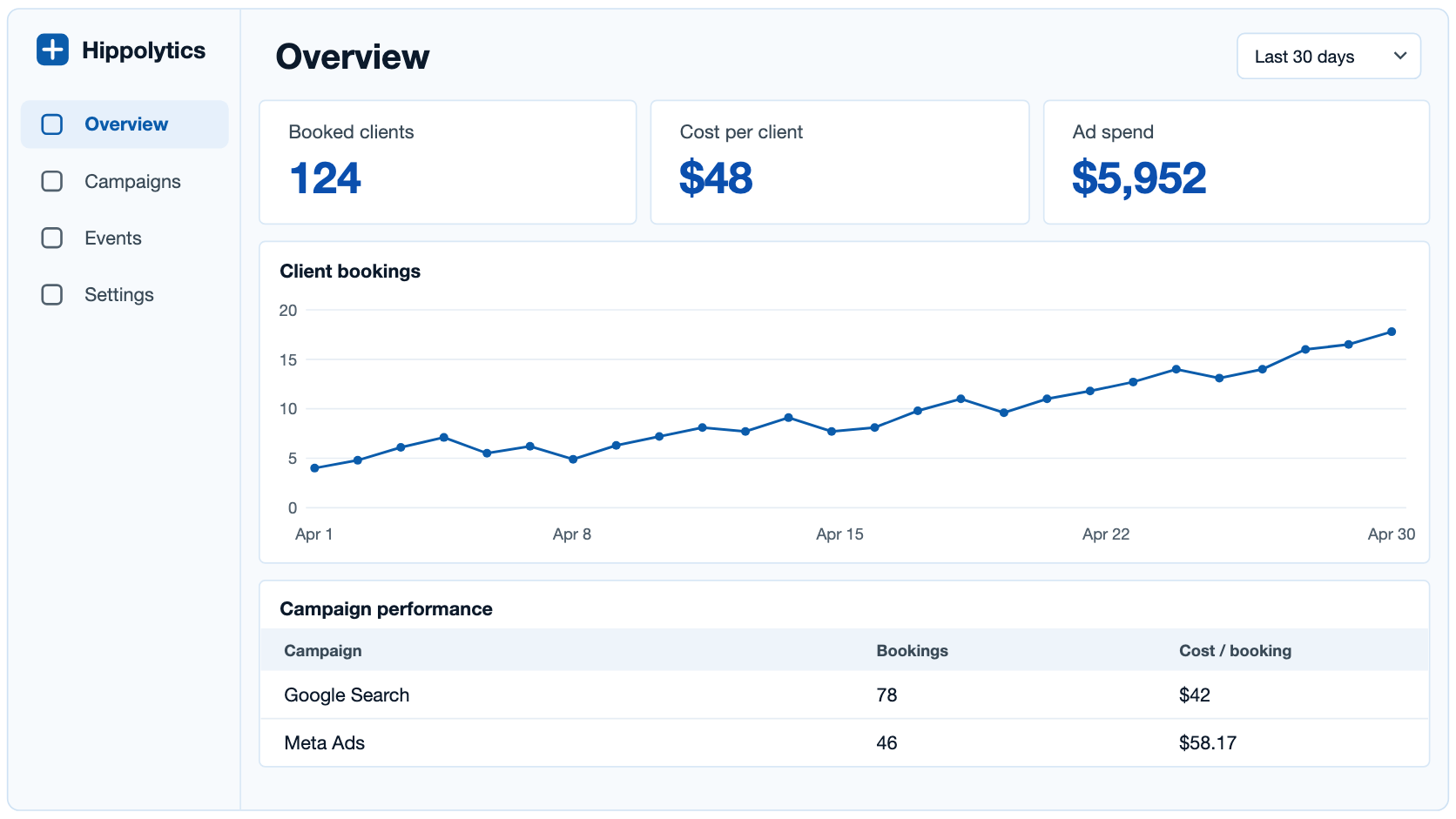
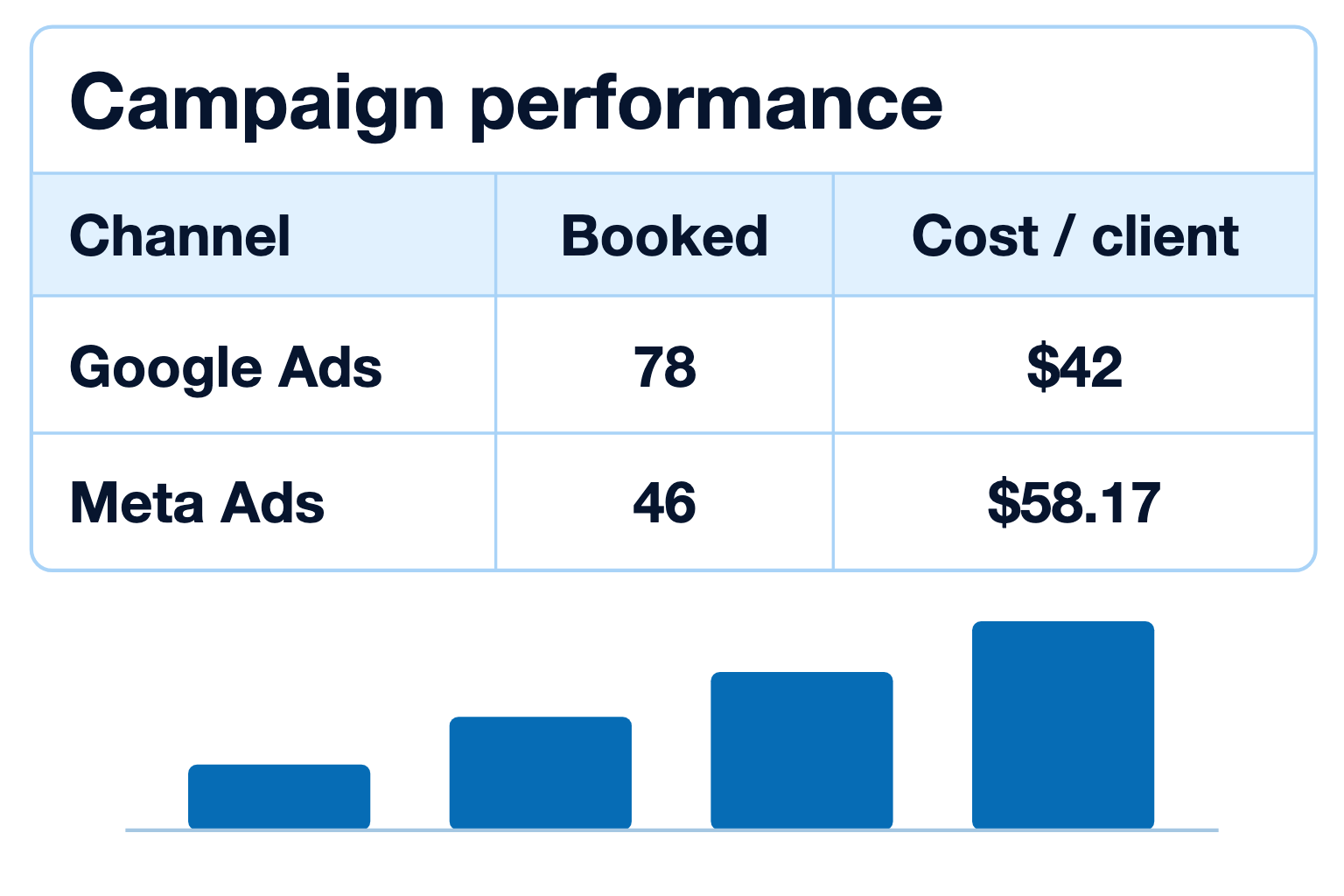
Booked clients, by campaign
See which campaigns led to consult requests and bookings, and what each one cost.
Your numbers, in your account
An independent record of results in an account you own. If you change agencies, it stays with you.

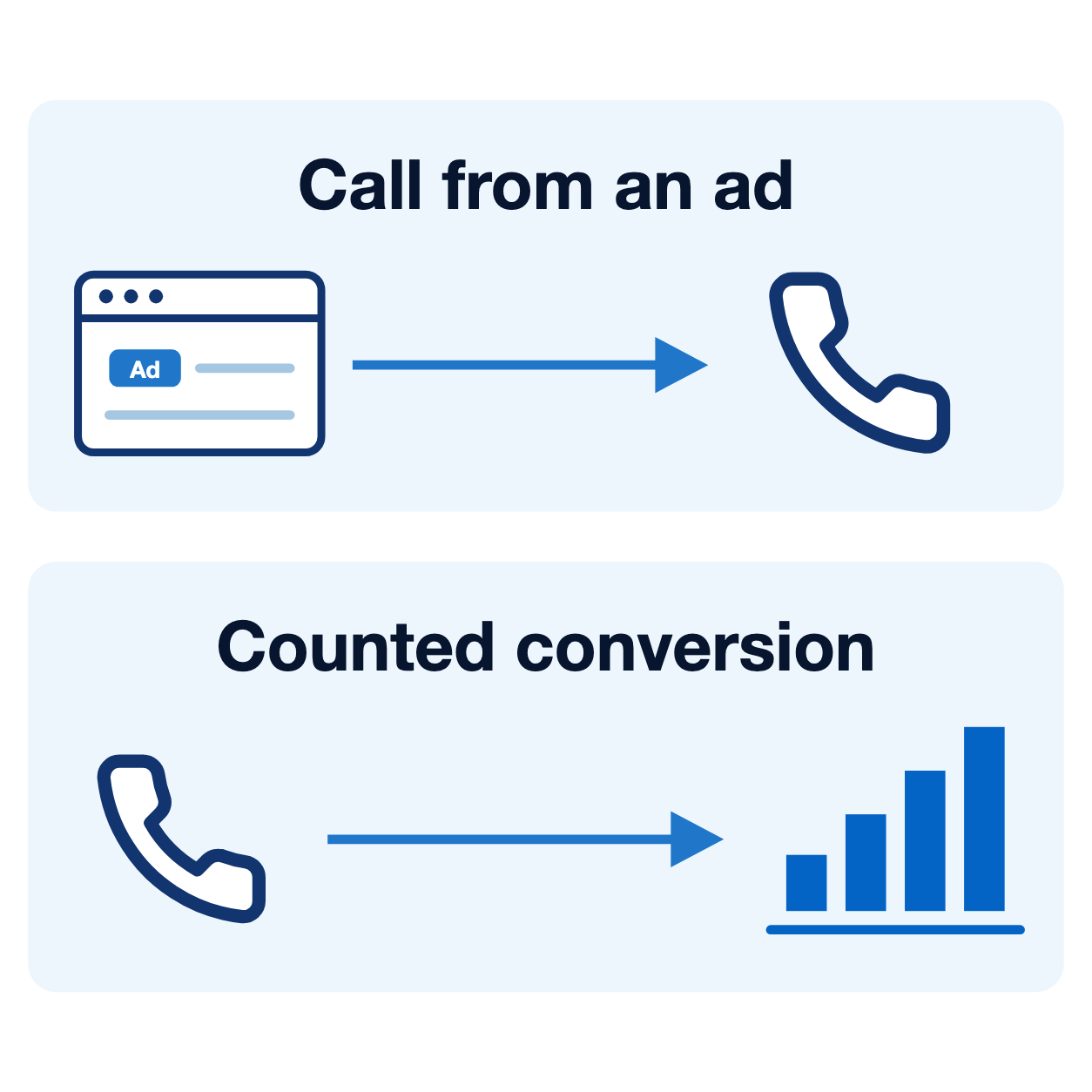
Call tracking
Calls that start from an ad are counted as conversions alongside forms and bookings.
A record of what was sent
A log of every event that went to Google and Meta and what was removed from it first.

Questions to ask any tracking vendor
Will you sign a BAA with us?
Yes, with every customer.
What exactly reaches Google and Meta, and can I see it?
Conversion events with names, emails, phone numbers and IP addresses removed. You can see each event that was sent.
Is your pricing published?
Yes, on this page.
Is there an annual contract?
No. Month to month.
Who does the install?
We set it up for you.
Will the event names you send to Meta mention a condition or a service?
No. Event names are neutral.
Frequently asked questions
Google flagged my ads for "Health in personalized advertising." Can I still advertise?
Yes. The notice means Google has placed you in a sensitive category, which removes audience features such as Customer Match and lookalikes. It does not ban therapy ads. Agencies that manage therapy accounts say search campaigns keep serving with a "limited" label.
Do I need LegitScript certification?
Google's certification rule applies to drug and alcohol addiction services. A general therapy practice is outside it. One therapist reported disapprovals because the landing page mentioned addiction services, so check the page your ads point to.
Can I use enhanced conversions or upload my client list?
Google's own policies say no for sensitive categories, whatever HIPAA says. Client lists cannot be used for Customer Match, and health-related conversions cannot be measured with enhanced conversions.
My clients book through SimplePractice. Can I see which ad led to a booking?
Hippo captures the request on your website and connects to scheduling tools to pick up the booking. On a walkthrough we'll look at your booking flow and show you what gets recorded.
Does my whole website need to be HIPAA compliant, or just the forms?
The pages where a visitor identifies themselves carry the most risk: contact, intake and booking. State wiretap and health data laws apply to the whole site, with or without HIPAA.
Could what happened to LifeStance happen to a small practice?
The laws used against LifeStance apply to any website, whatever the size of the practice. Law firms scan healthcare sites for tracking tags, and the page they look at is the booking page.
Should I talk to a lawyer about the tracking on my website?
Yes, if you want to know how these laws apply to your practice. This page describes laws and court cases for general information and is not legal advice. Hippo handles the tracking; an attorney can advise you on your obligations.
Pricing
1,000 visitors/month
$99/month
Month to month.
Start now, no demo call1,000 visitors/month(opens in a new tab)2,000 visitors/month
$199/month
Month to month.
Start now, no demo call2,000 visitors/month(opens in a new tab)10,000 visitors/month
$299/month
Month to month.
Start now, no demo call10,000 visitors/month(opens in a new tab)
Every plan includes:
- BAA signed at checkout
- No setup fees
- Cancel anytime. No compliance add-on that locks you in the day you enable it.
Server-side conversion tracking under a BAA, at a price a practice can actually pay.
Other industries
Therapists and Group Practices
See which campaigns bring new clients.
Addiction Treatment and Recovery(opens in a new tab)
Connect campaign spend to intake inquiries.
Ketamine and Psychedelic Clinics(opens in a new tab)
Measure consultation bookings by campaign.
Telehealth(opens in a new tab)
Understand what drives online bookings.
Mens Health DTC(opens in a new tab)
Compare acquisition across your campaigns.
Womens Health and Fertility(opens in a new tab)
See which campaigns drive consultations.
Dental(opens in a new tab)
Know your cost per booked patient.
Med Spas(opens in a new tab)
See which promotions get booked.
Dermatology(opens in a new tab)
Connect campaign spend to appointments.
Imaging and Radiology(opens in a new tab)
Measure calls and booking inquiries.
Primary Care and Multi Specialty Groups(opens in a new tab)
See which campaigns bring new patients.
Labs and at Home Testing(opens in a new tab)
Understand which campaigns drive inquiries.
Hospitals and Health Systems(opens in a new tab)
Connect campaigns to appointment inquiries.
Consumer Apps & Devices(opens in a new tab)
See which campaigns drive website inquiries.